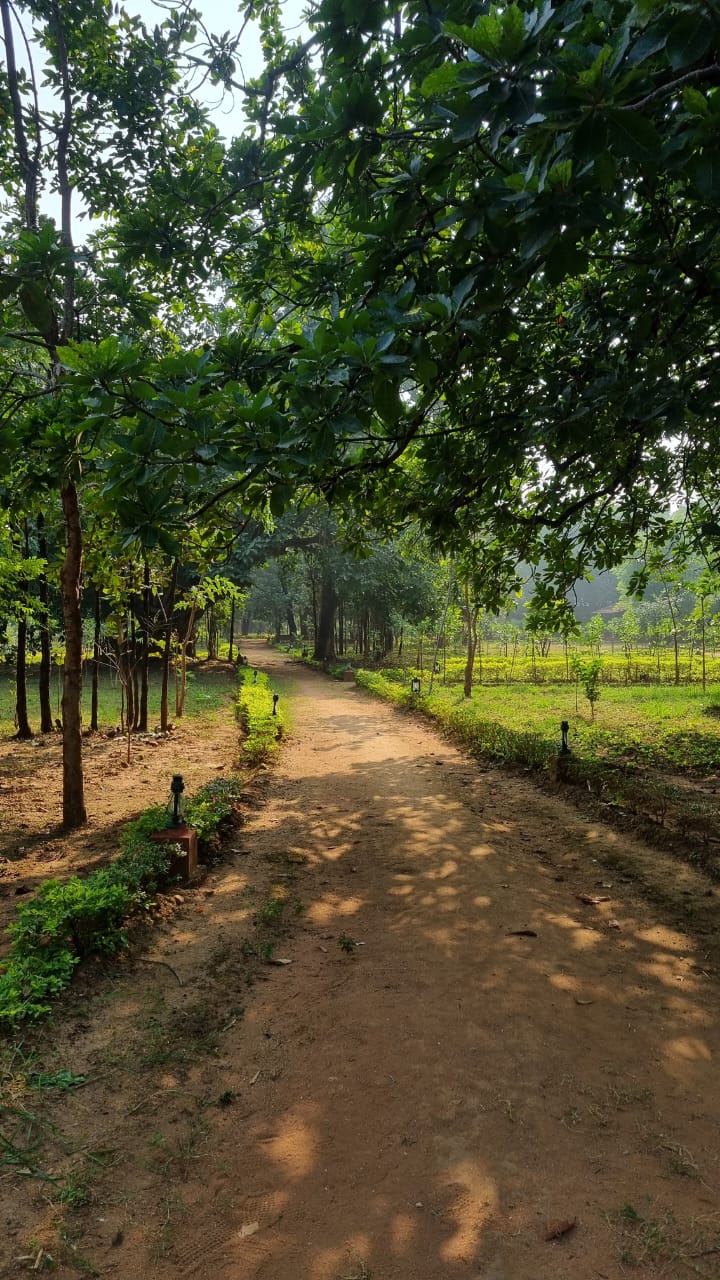
We often go to the forest to find wildlife. But sometimes, the greatest discovery is the silence we find within ourselves when we stop looking for the "big catch."
Shinrin-yoku, or forest bathing, isn't about exercise. It's about taking in the forest through our senses. In Bandhavgarh, this experience is heightened by the ancient energy of the land. The trees here have stood for centuries, watching the rise and fall of dynasties and the quiet passing of countless seasons.
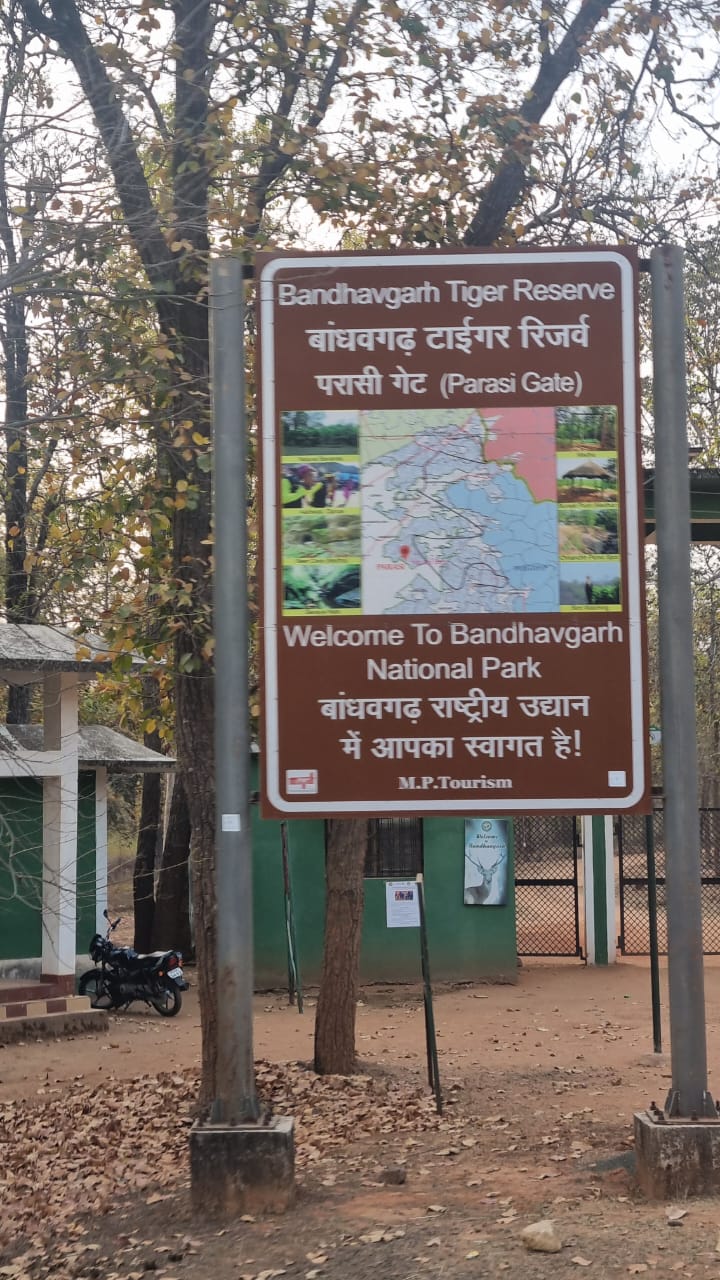
Entering the sacred space of Sal trees.
On my second day, I decided to skip the morning safari and simply sit by the edge of the buffer zone. I closed my eyes. At first, my mind was a whirlwind of to-do lists and digital noise. But slowly, the forest began to pull me in.
"The forest is not just a place to visit. It is a place to return to ourselves."
I felt the humidity on my skin, the scent of damp earth and crushed leaves, and the rhythmic buzzing of cicadas. My breathing slowed. The tight knot in my chest, a permanent resident of my urban life, began to loosen.
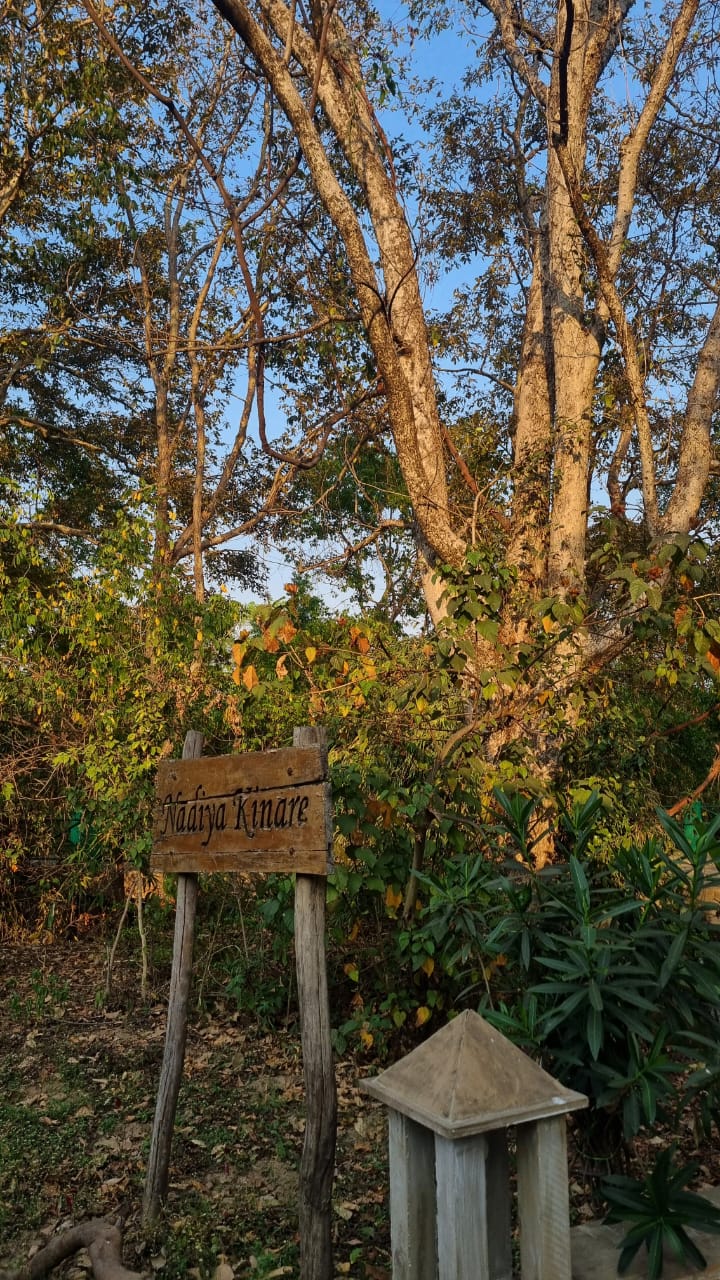
Walking without a destination is the best way to arrive.
By the third day, the transformation was complete. I wasn't just observing the forest; I felt a part of it. The "healing" wasn't a miracle; it was simply a recalibration. My nervous system had finally found a rhythm it recognized.
We don't need to fly halfway across the world to find this. We just need to find a space where the wild still speaks, and then—critically—we need to listen.