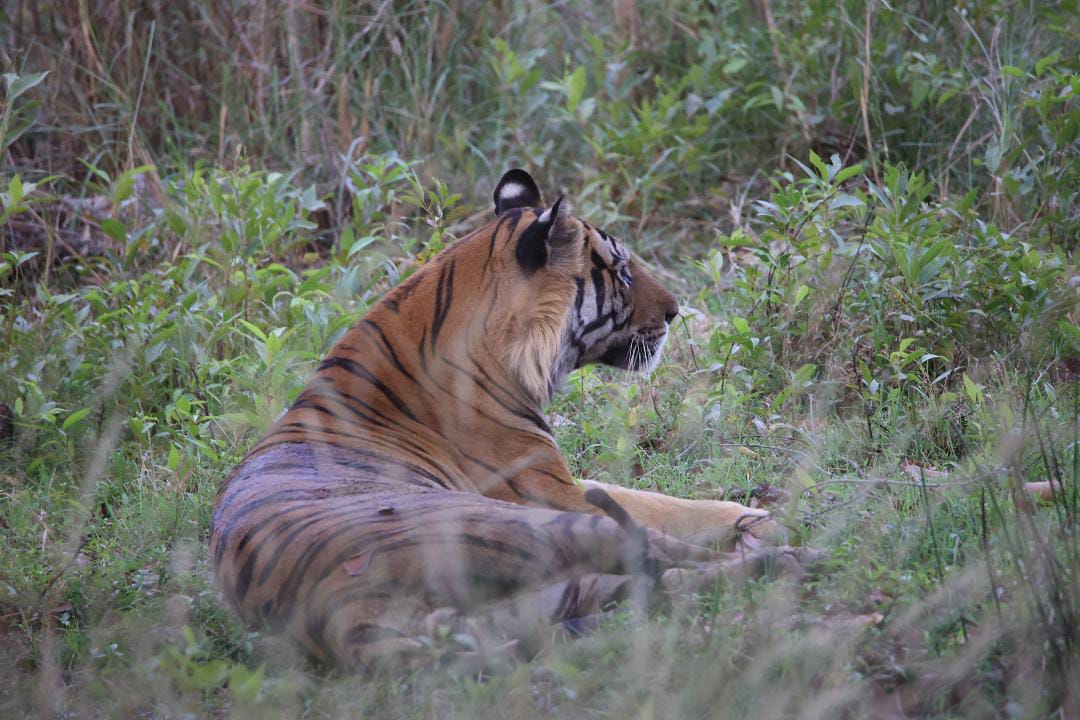
In the deep thickets of Bandhavgarh, time doesn't move in minutes or hours. It moves in breaths, in the rustle of dry leaves, and in the sudden, heavy silence that falls when a predator is near.
I had been sitting in the safari gypsy for four hours. The sun was beginning its slow descent, painting the Sal trees in shades of burnt orange. My neck ached, and my focus was beginning to waver. "Why do we wait?" I whispered to our guide. He didn't look back; he simply pointed a steady finger toward a patch of golden grass.
The forest was quiet, save for the distant call of a langur. Somewhere in the dense sal thickets of Bandhavgarh, a shadow moved. It wasn't the sudden dash of a deer or the nervous twitch of a wild boar. It was slow, deliberate, and entirely silent.
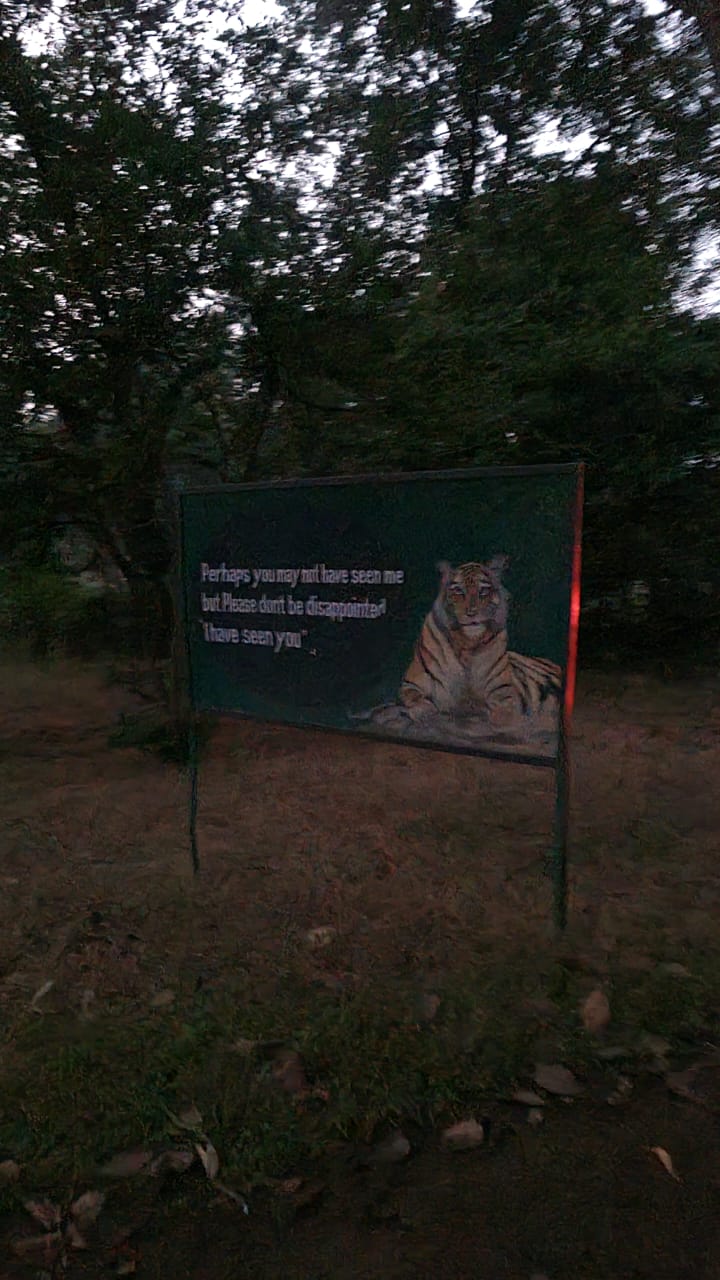
The unseen presence: a message from the deep thicket.
Hidden there, perfectly camouflaged, was a tigress. She wasn't stalking; she was simply *being*. Her eyes were half-closed, yet every muscle in her body was tuned to the environment. She wasn't restless. She wasn't checking her "clocks." She was waiting for the perfect alignment of opportunity and action.
"The wild doesn't rush. It waits until the moment is ripe."
In our world, we equate speed with success. We feel behind if we aren't constantly moving. But watching her, I realized that true power lies in the ability to remain still. Her patience wasn't passive; it was an active, focused state of readiness.
Patience in the wild is not passive. It is an active state of readiness. To watch a tiger is to understand that the most powerful movements often come after the longest periods of stillness.
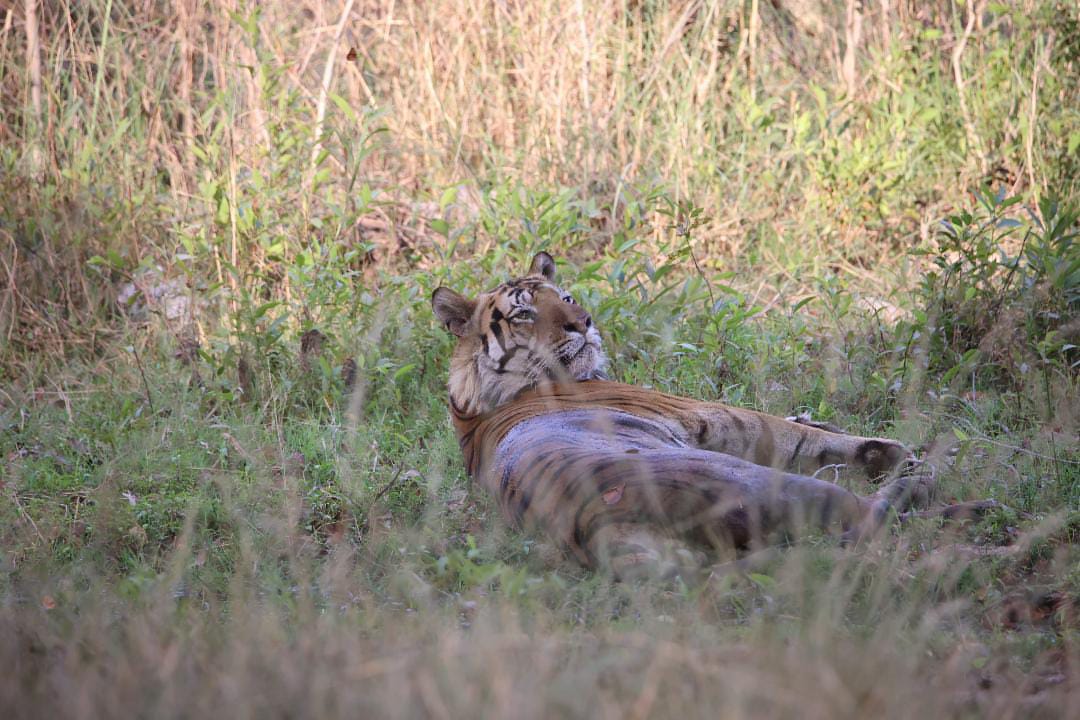
Focus and readiness: the essence of wild patience.
When the moment finally came—a spotted deer moving just a fraction too far from the herd—it was over in a flash of orange and black. She didn't waste energy on a chase that wasn't certain. She waited for the certainty.
I left the forest that day with a new understanding of my own restlessness. Perhaps the answer to "what's next" isn't to run faster, but to wait longer—with the steady, quiet patience of the wild.