Heritage: Stories Painted on the Skin of the World
A
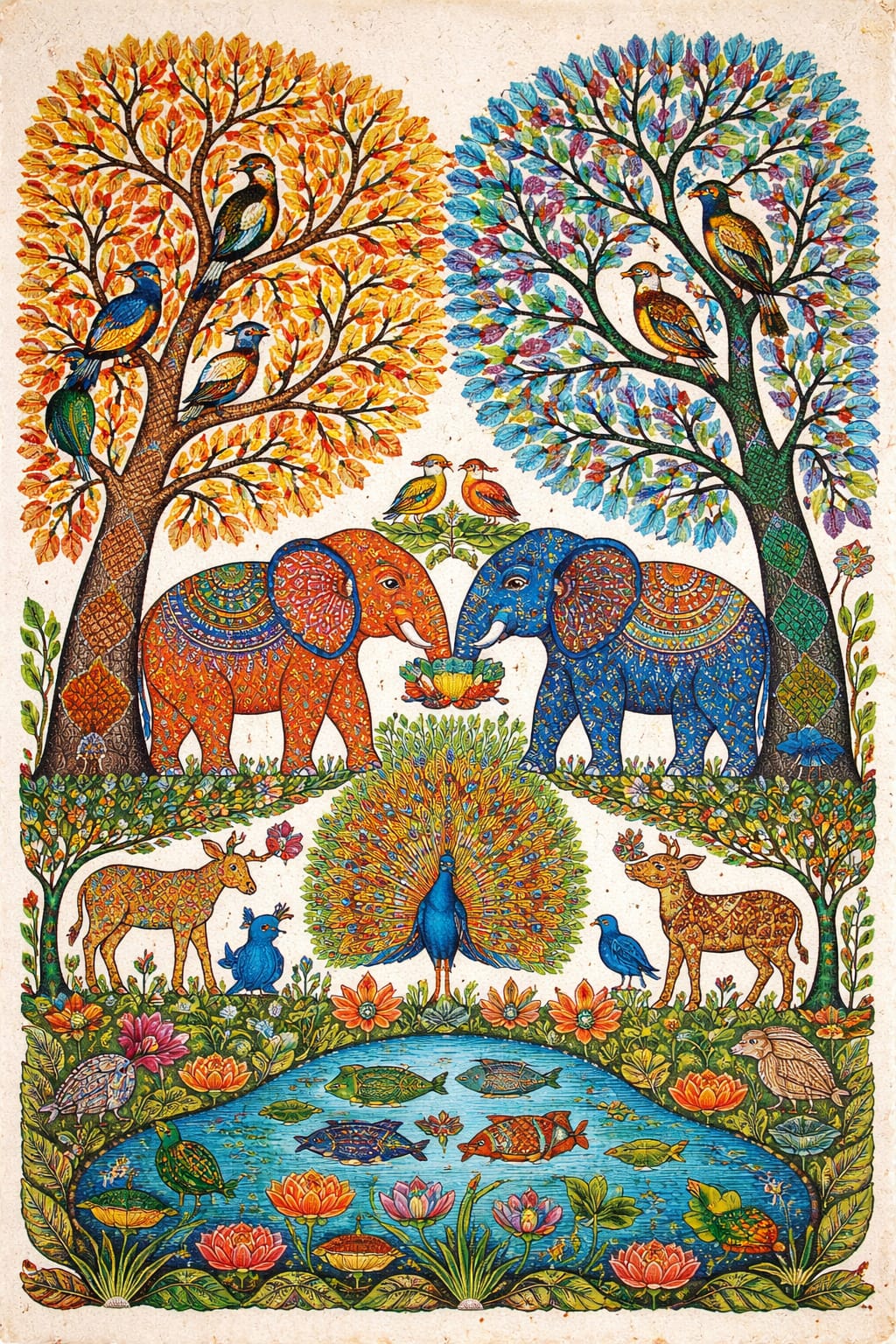
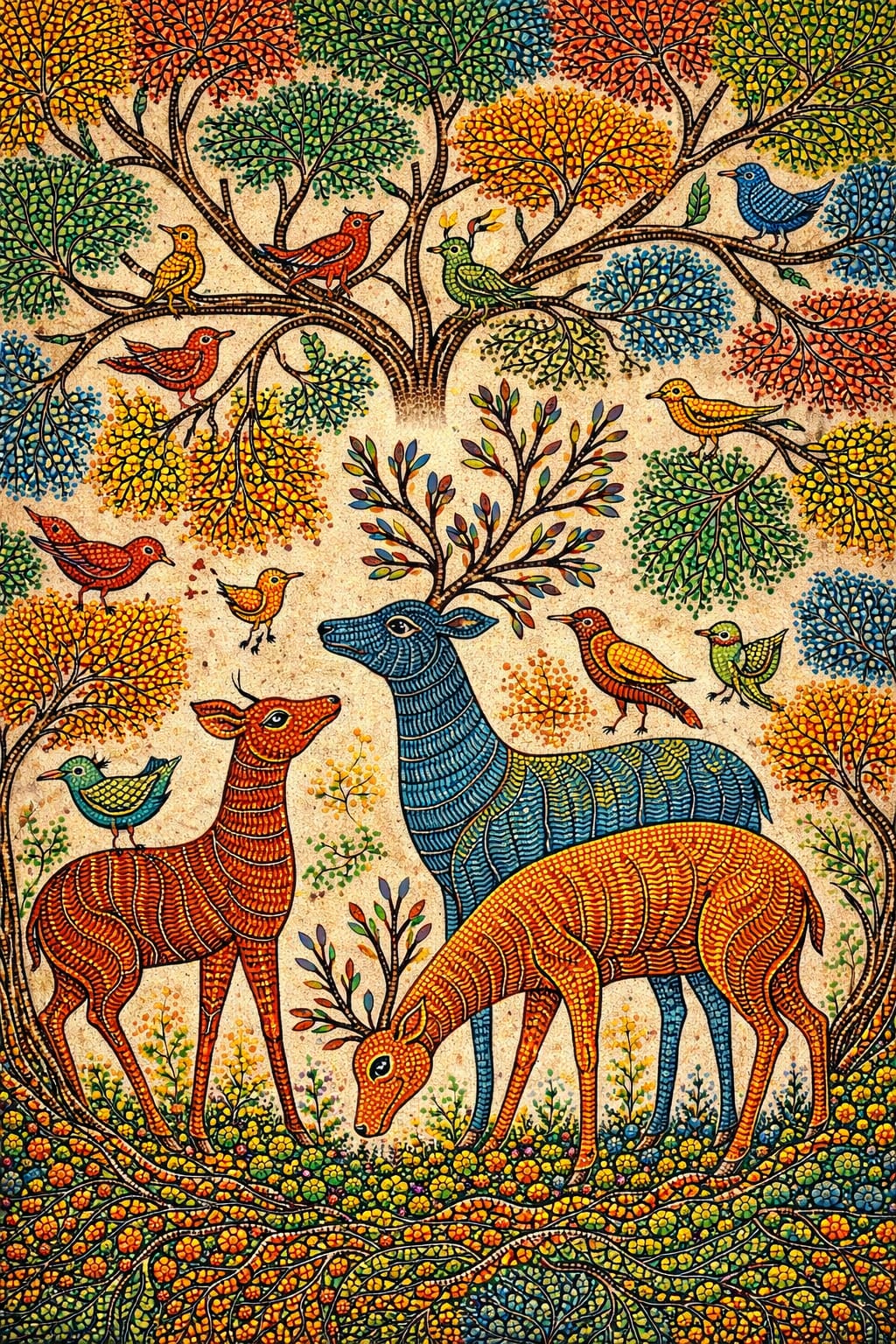
For the Gond people of central India, the forest is not just a place of residence—it is a spiritual relative. Gond art is an expansion of the *Digna*—traditional decorative patterns painted on floors and walls during festivals. In these vibrant illustrations, the line between the animal, the tree, and the human is deliberately blurred, reflecting a worldview where everything is interconnected.
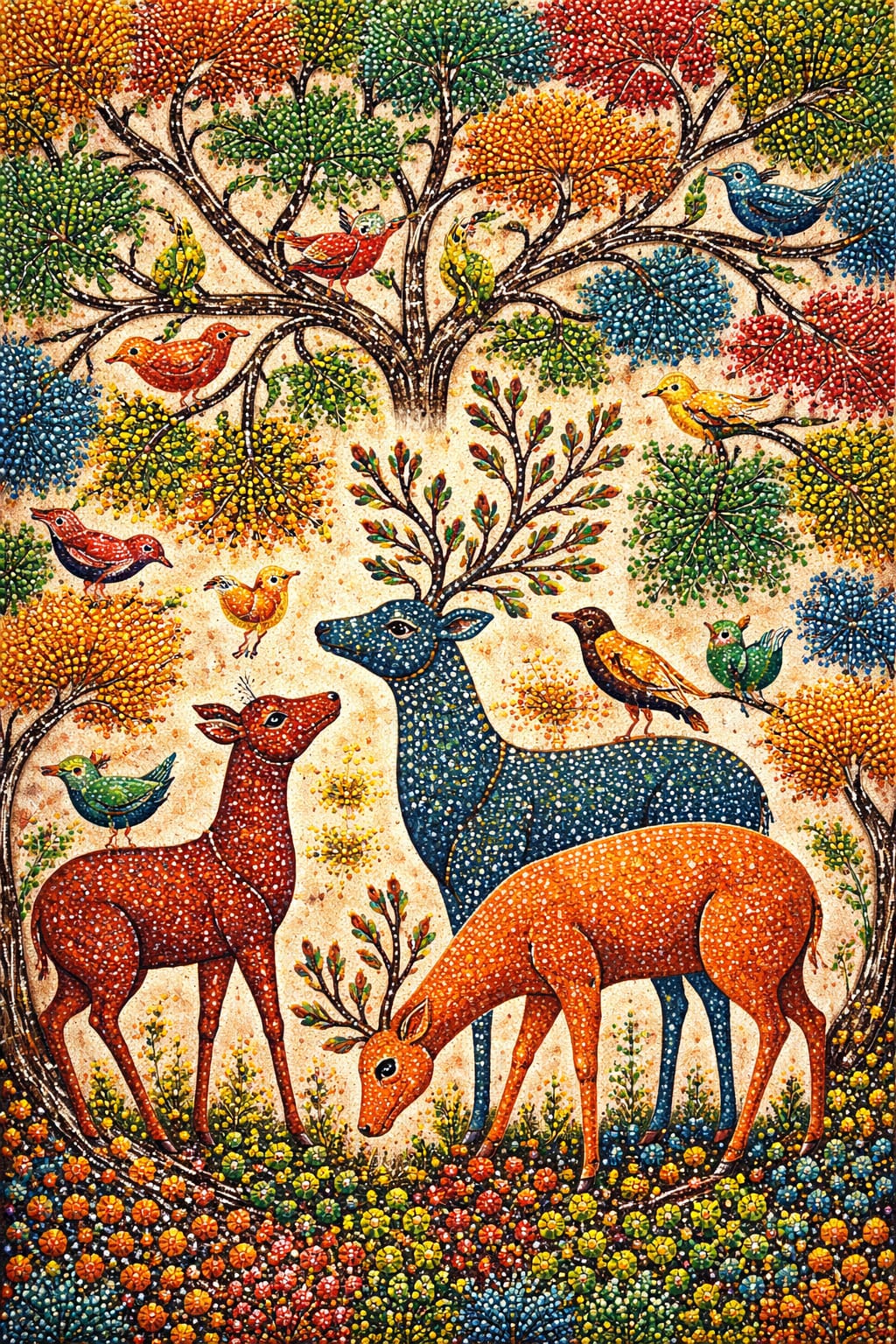
Gond art is famous for its intricate "internal patterns"—dots, dashes, and scales that fill the silhouettes of deer, tigers, and birds. These are not merely decorative fills; they are "The Secret Language," a way of representing the life force that flows through every living thing.
Connection: The Breath of the Forest
In Gond belief, a tree is the axis of the world. It provides shelter to birds, shade to animals, and spiritual grounding to humans. The Tree of Life is the most recurring symbol in this art form, often depicted with sweeping, spiraling branches that harbor a whole ecosystem of creatures.
Pattern: Dots
Breath & Energy
The dot represents the *Prana* or life force. It is the smallest unit of existence, suggesting that everything is filled with energy.
Pattern: Lines
Sound & Movement
Dashed lines represent the movement of wind and the flow of water through the forest, connecting the earth to the sky.
Wildlife is seen as a relative, not a resource. When a Gond artist draws a tiger, they are not drawing a predator; they are drawing a guardian of the forest's secrets. This philosophy shifts our perspective from consumption to informed coexistence.
Healing: Zooming into the Infinite
The healing power of Gond art lies in its demand for attention. To look at a Gond painting is to practice "deep looking." You start with the large silhouette of a tree, but as you move closer, you discover thousand-fold details—every leaf has its own pattern, every branch its own story.
This "zooming in" acts as a mental grounding technique. By shifting focus from the overwhelming "big picture" of our anxieties to the intricate "micro-details" of the artwork, we anchor our attention in the present moment. Gond art reminds us that even when the forest seems still, it is alive with a billion tiny, beautiful rhythms.
Material Spotlight: Colors of the Earth
Traditional Gond art uses natural pigments derived from the land, connecting the artwork to the mineral and organic heart of the forest.
Yellow Clay (Pila Mitti)
Sourced from local riverbeds, this clay provides a warm, sunny glow to the depictions of forest life.
Charcoal (Kala)
Derived from burnt wood, it is used for the bold outlines and the intricate internal patterns.
Green Leaves
Crushed bean leaves and wild foliage provide the vibrant greens of the Gond forest canopy.